Eighteen years after the original AION defined a generation of flight-obsessed MMO players, its sequel just pulled off one of the biggest free-to-play launches Steam has seen in years. AION 2 went live globally on October 5, and within hours nearly 400,000 concurrent players were soaring over its shattered world of Atreia. The numbers are enormous. The mood, though, is complicated.
Here is the full picture: the record-setting launch, what players actually think of the game, and the monetization fight that has the community — and NCSoft’s stock price — in turmoil.
By the numbers: a genuine phenomenon
SteamDB recorded an all-time peak of 397,905 concurrent players on October 5, launch day — and that figure covers Steam only. NCSoft says the true peak, including players on its own PURPLE launcher sharing the same servers, pushed past 400,000. For context, that is roughly 2.3 times the 171,530 peak from the paid Founder’s Pack early access period that ran September 30 through launch.
The launch also moved markets. NCSoft shares climbed more than 14% across two trading days during early access, then slid back after launch as investors decided the numbers, huge as they were, came in below expectations. One Korean securities firm cut its price target on the stock.
AION 2 now sits comfortably in Steam’s top five most-played games, holding daily peaks around 400,000 with lows staying above 200,000. It topped Steam’s Popular New Releases and Trending Free-to-Play charts on day one.
What the game actually is
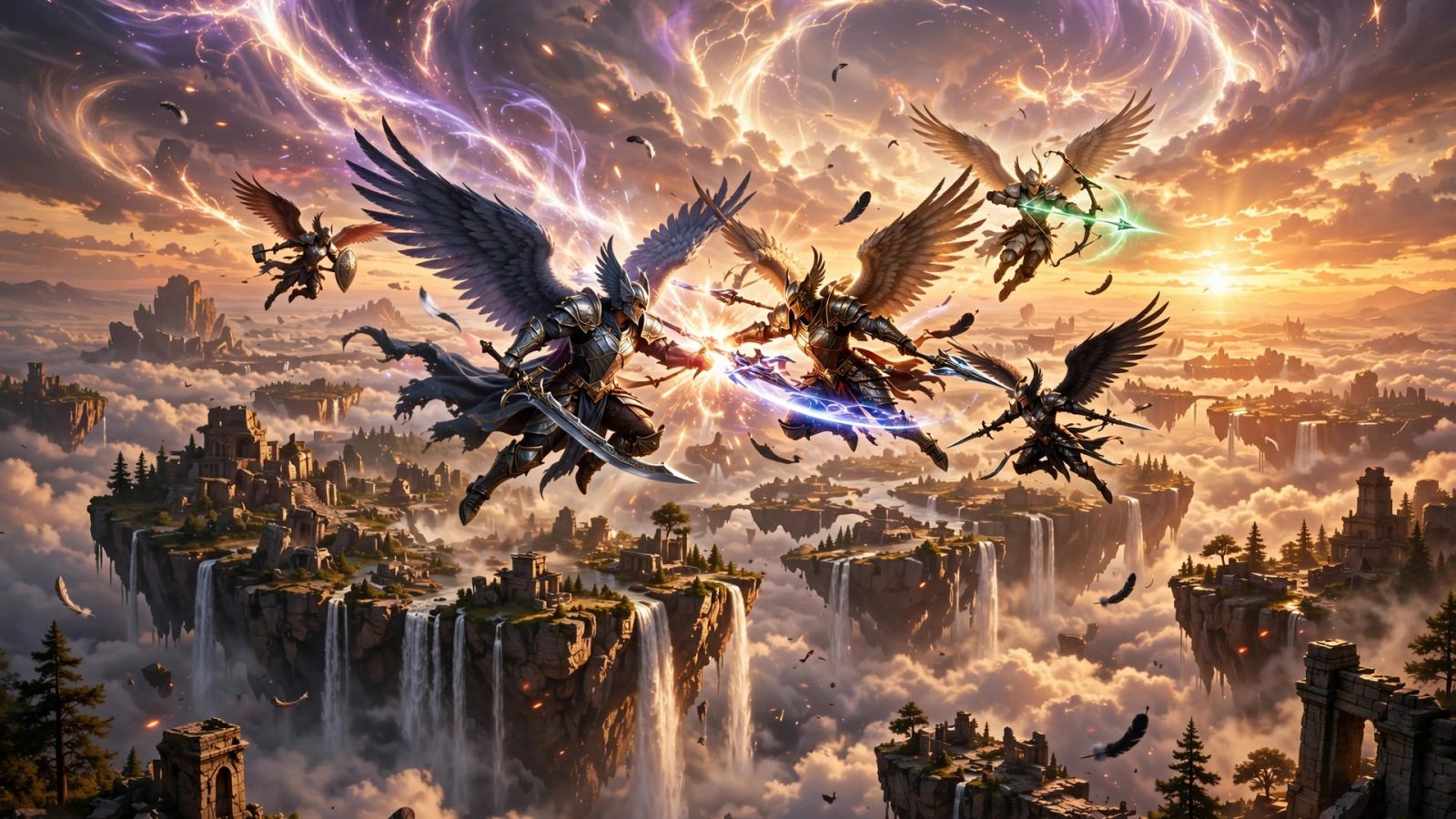
AION 2 is a direct sequel to NCSoft’s 2008 MMORPG, set 200 years after the original. Players take on the role of a Daeva — a fallen supernatural warrior — in Atreia, a world broken by the destruction of the Tower of Eternity. The ancient faction war between the Elyos and the Asmodians carries over, now complicated by the Balaur, a third faction empowered by the Tower’s collapse.
Technically, it is a major leap. The original ran on CryEngine and restricted flight to designated zones. AION 2 runs on a heavily modified Unreal Engine 5 with a 1,200-square-kilometer open world and no loading screens between zones. You can fly, fight in midair, and dive underwater anywhere — combat was redesigned around true three-dimensional engagement, since attacks can come from any direction.
The game operates servers across four regions — North America, South America, Europe, and Japan — and is localized in eight languages. It is rated T for Teen by the ESRB.
What players love
Strip away the business model, and the response to the game itself is warm. Reviews praise the modern visuals, the aerial combat, an unusually deep character creator, and the sense of exploration that comes with unrestricted flight. Players with significant hours in the game rate it far more positively than the overall average suggests — a sign the core loop is working for the people actually playing it.
The faction warfare, the signature draw of the original, is back and widely cited as a highlight. For lapsed AION veterans, the nostalgia factor is doing heavy lifting.
The monetization problem
Here is where the story turns. AION 2 is free to play, but its monetization — rebuilt specifically for Western markets — has triggered a full-blown backlash, and it is the single biggest driver of the game’s “Mixed” Steam rating, currently sitting around 62–65% positive across nearly 20,000 reviews and sliding.
The complaints, in brief:
- The membership gate. Without a paid membership, access to the in-game marketplace and personal trading is restricted. Critics call it a “one game, two payment systems” model that punishes free players.
- Real money to power. Real cash can be converted through the Kinah/Quna currency exchange into in-game wealth, which buys gear and faster progression — the textbook definition of pay-to-win in the eyes of the community.
- Per-server, per-character nickel-and-diming. The monthly membership is tied to individual servers rather than the whole account, and progression passes must be purchased separately for each character. Dungeon entry counts favor paying members, who get more runs and progress faster.
- AI-generated content. A separate thread of negative reviews targets artwork and content players believe was AI-generated.
NC America co-CEO Merv Lee Kwai called the launch “a strong start” and promised the shop would focus on cosmetics rather than competitive advantage. The community’s verdict, judging by the review trend, is that the promise is not holding.
What happens next
This is the familiar MMO launch arc: a spectacular opening week, then a referendum on the business model. NCSoft has a window here — the game underneath the shop is genuinely well-liked, the servers are full, and the IP has eighteen years of goodwill. But every week the monetization stays as-is, the review score keeps sliding and the narrative hardens.
The Korean and Taiwanese versions have been live since November 2025, so NCSoft is not flying blind; it has nearly a year of live-service data. Whether it adjusts the Western monetization or doubles down will define AION 2’s second month far more than its first week did.
For now, the takeaway is simple: one of the biggest MMO launches in recent memory, a game players mostly enjoy, and a cash shop controversy that could still swallow both. We will be watching the patch notes.