CD Projekt Red is not ready to show you Cyberpunk 2. There is no gameplay, no trailer, no hero, and no release date — and the studio seems perfectly comfortable with that. What it has shown, quietly and in numbers, is momentum: the sequel to Cyberpunk 2077 has gone from a small Boston outpost to a team of more than 180 developers, and the people running it say they are building it differently this time on purpose.
The team has nearly doubled in a year
Cyberpunk 2, formerly codenamed Project Orion, entered pre-production in spring 2025. At that point, in April 2025, just 96 developers were assigned to it. By the end of July 2026, that number had reached 184, according to CD Projekt Red’s H1 2026 earnings report. Game director Gabe Amatangelo confirmed the scale again in October, saying “more than 180” developers are now working on the game.
For context, that is still a fraction of the studio’s main effort. The Witcher 4 remains CD Projekt Red’s priority project, with more than 500 developers attached and an expected 2028 window.
The project is led from Boston, with support from Vancouver and other CD Projekt Red teams. Amatangelo himself is a significant part of the pitch: he directed Phantom Liberty and oversaw the sweeping 2.0 update that helped rehabilitate Cyberpunk 2077 after its disastrous launch.
Built in pods, not silos
The most revealing detail so far is not a feature at all. It is how the game is being made.
In a September 25, 2026 interview, Amatangelo and creative director Igor Sarzynski described building Cyberpunk 2 in cross-discipline, “player-oriented pods” — small groups mixing art, audio, gameplay, and narrative staff, all working on the same player experience together. Sarzynski called it a complete switch in method, refined during Phantom Liberty’s development.
The contrast with Cyberpunk 2077’s original development is the point. That game was built in large part by separate disciplines working apart from each other, a siloed structure that the sequel’s leads have linked to the communication breakdowns behind the 2020 launch. The pod model is designed to force problems to surface early instead of at the end.
Night City stays — and it is getting company
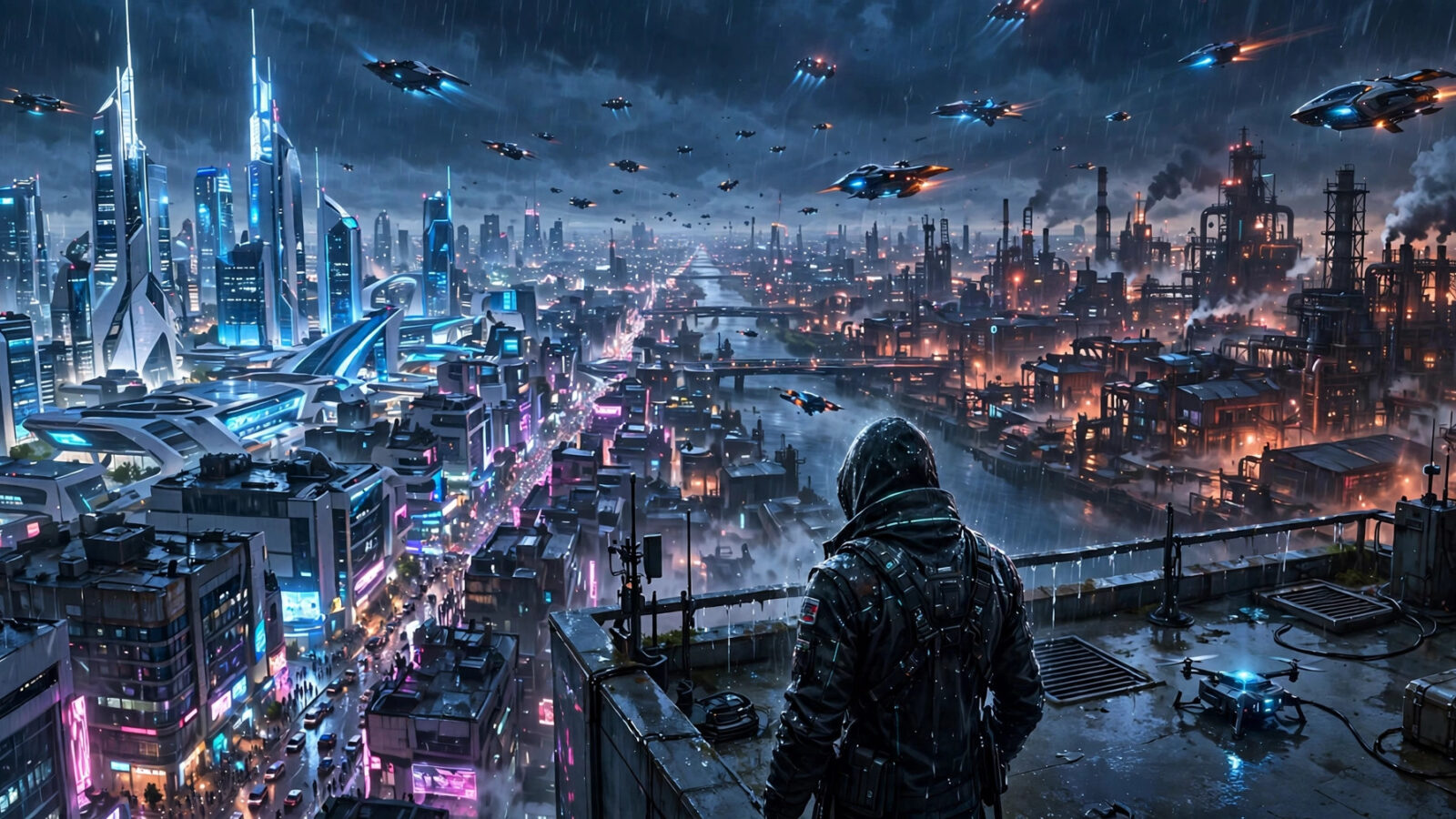
What we know about the setting is tantalizing and carefully limited. Night City is still in the game. It is also not the only city.
Cyberpunk creator Mike Pondsmith, speaking at Digital Dragons in May 2025, described the second location as feeling “like Chicago gone wrong” — explicitly not like Blade Runner. That phrasing has fueled endless speculation, so it is worth being precise: Pondsmith described a vibe, not a confirmed location. Chicago itself has not been officially confirmed by name, and CD Projekt Red has not said how large either city will be or how time will be split between them.
Still, the shape of the idea is clear. A second city lets the sequel show a different side of its universe without abandoning the place players already know. Whether the two cities are equal in scale, or how time is split between them, remains unanswered.
Technically, the sequel is also a break from the past. It is being built on Unreal Engine 5, not CD Projekt Red’s own REDengine — a switch that points toward a denser, more reactive city, though an engine change alone does not guarantee performance.
What we still do not know
Here is the honest list, because it is long: no gameplay has been shown. No protagonist has been confirmed. There is no confirmation that V returns, that Johnny Silverhand appears, or that any particular Cyberpunk 2077 ending is canon. The timeline of the story has not been revealed.
Even the name is provisional. “Cyberpunk 2” is a working title, not the final name — CD Projekt Red’s PR team clarified that back in May 2025. Expect the real title to arrive much later, probably alongside the first real reveal.
Multiplayer sits in the same uncertain category. It is unconfirmed, full stop. Job listings for network engineering, matchmaking, and single-plus-multiplayer systems suggest the capability is being built, but listings are not an announcement, and CD Projekt Red has not committed to multiplayer in the sequel.
So when does it actually come out?
There is no official date or window, and anyone giving you one as fact is guessing. But there is a reasonable way to estimate.
Joint CEO Michal Nowakowski said on a May 2025 investor call that going from pre-production to release typically takes four to five years. The sequel entered pre-production in spring 2025, so that math points to late 2030 or early 2031. Present that for what it is: an estimate derived from his comment, not a commitment from CD Projekt Red.
Separately, Polish analyst firm Noble Securities has predicted a budget of roughly $419 million and a 2030 release with multiplayer. Label that clearly as analyst speculation, not the studio’s word — it is an outside estimate, and its multiplayer claim goes further than anything CD Projekt Red has confirmed.
None of this should surprise anyone who watched Cyberpunk 2077’s arc. That game has now passed 40 million copies sold, and Phantom Liberty has passed 10 million. The sequel does not need to rush; the studio’s reputation depends far more on it launching in good shape than on it launching soon.
One more thing, briefly
While the game itself stays in the shadows, the wider Cyberpunk universe has not: Cyberpunk: Edgerunners 2 premiered on Netflix on October 20, 2026, with early reviews mixed. It is a side note, not the story — but it is a reminder that Night City is not going quiet while its sequel cooks.
The bottom line is simple. Cyberpunk 2 is real, it is growing fast, and it is being built by a team that says it learned the right lessons from 2020. It is also years away and mostly unrevealed, deliberately so.